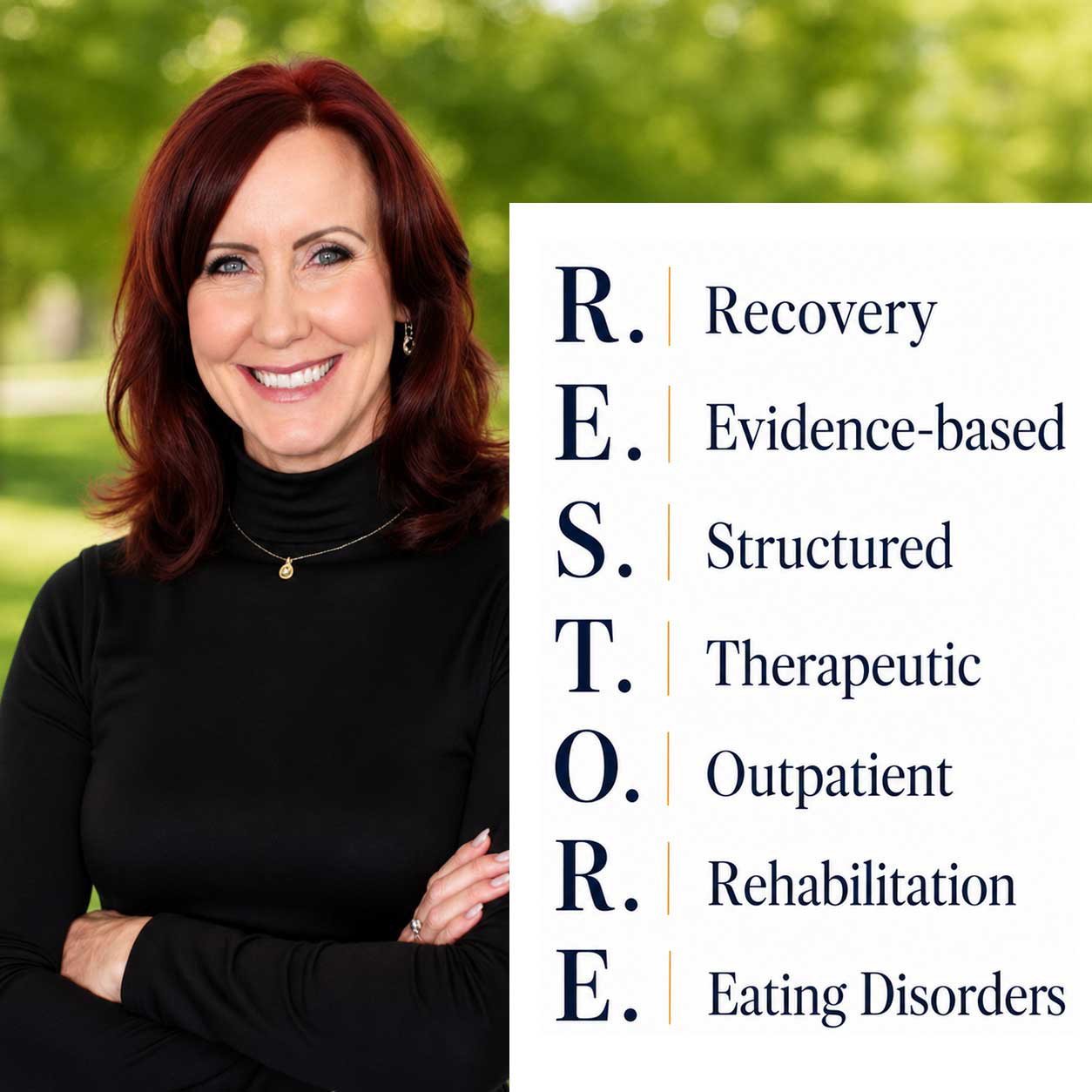
Why R.E.S.T.O.R.E. MNT Exists, and How the Clinical Guardrails Work
Current level-of-care assignment in eating disorder treatment is an escalation ladder with bundled tiers: standard outpatient, IOP, PHP, residential, inpatient. Each rung bundles several things together at once — nutrition intensity, therapy intensity, milieu supervision, and, at the higher tiers, housing.
There is no tier in that ladder that isolates and intensifies the nutrition axis alone while leaving everything else — the client’s home, their existing therapist and psychiatrist, their job, their family — untouched. So when the clinical reason for a referral out is specifically “this client needs more nutritional structure and monitoring than once-weekly visits provide,” the standard continuum has one answer: move the client into a bundled program that changes their housing and their entire care team, whether or not those were the actual problem.
R.E.S.T.O.R.E. MNT is built for that specific gap — clients who don’t meet inpatient or residential medical criteria, aren’t succeeding on standard once-weekly outpatient nutrition care, and have a support system, existing providers, and life circumstances that make bundled higher levels of care unnecessary, clinically inappropriate for their presentation, or genuinely inaccessible. It is not a substitute for medical stabilization when that’s what’s indicated. It is a formal, physician-anchored answer for the population the current continuum has never had a defined tier for.
IOP is typically billed at 9–19 hours per week for adults, most of it group-based — group therapy, group nutrition education, group meal support — with individual dietitian time folded in as a small piece of a much larger shared program. The structure itself is shaped as much by per-diem billing requirements (payers generally require a minimum of 180 minutes of active therapy per day to reimburse) as by any individual client’s actual nutrition need. It also typically requires leaving an existing outpatient team for a facility’s rotating staff, and requires a time commitment many working adults, parents, and students simply cannot sustain — regardless of whether insurance covers it.
Where this model closes that gap, concretely, start to finish:
Intake
Nutrition Rx
The meal plan itself
Snack plans
Grocery lists
The weekly rhythm
Accountability between sessions
Trending and analysis
Ongoing revision
WELCOME TO
A New Category of Care
Intensive nutritional rehabilitation has never existed at the outpatient level — until now.
R.E.S.T.O.R.E. MNT™ fills three gaps in the eating disorder treatment continuum that have always existed but never had a clinical home:
Between Standard Outpatient and IOP
When Inpatient or Residential Is Indicated but Not an Option
Nutrition-Focused FBT for Pediatric and Adolescent Cases
The Standards This Model Sits On
Nothing about the clinical thresholds used here originates with this practice. They’re the same standards used across the field:
American Psychiatric Association (APA)
Academy for Eating Disorders (AED)
American Academy of Pediatrics (AAP)
The Joint Commission (TJC)
ACUTE Center for Eating Disorders & Severe Malnutrition
Society for Adolescent Health and Medicine (SAHM)
American Academy of Pediatrics (AAP)
American Society for Parenteral and Enteral Nutrition (ASPEN)
Centers for Medicare and Medicaid Services (CMS)
Ready to Begin
How to Refer
Provider referrals, questions about a specific case, or requests to review the monitoring and attestation documentation directly are welcome.
When This Model Is — and Isn’t — the Right Referral
It fits when: a client is medically stable enough for outpatient care per the standards above, but standard once-weekly nutrition visits aren’t providing enough structure, monitoring, or intensity to make progress — and the client has a home environment and existing care team capable of supporting more intensive outpatient work.
It is not appropriate, and won’t be used, when: a client meets acute medical instability or hospitalization criteria. Those clients are referred for medical stabilization first, per the same standards any provider in this field already works from — no exception, and no delay while alternatives are considered.
This form is to let us know you are interested in the family/loved ones virtual group. Once we have enough people we will schedule a start date and let you know.
Adult Group Interest
This form is to let us know you are interested in the adult virtual group. Once we have enough people we will schedule a start date and let you know.
Adolescent/ Teen Group Interest
This form is to let us know you are interested in an adolescent/ teen group. Once we have enough people we will schedule a start date and let you know.